How to Stop Your Mom (or Anyone You Love) From Getting Scammed in 2026
Why call blockers fail against AI voice cloning, and the exact steps to protect your family's finances from modern phone fraud.
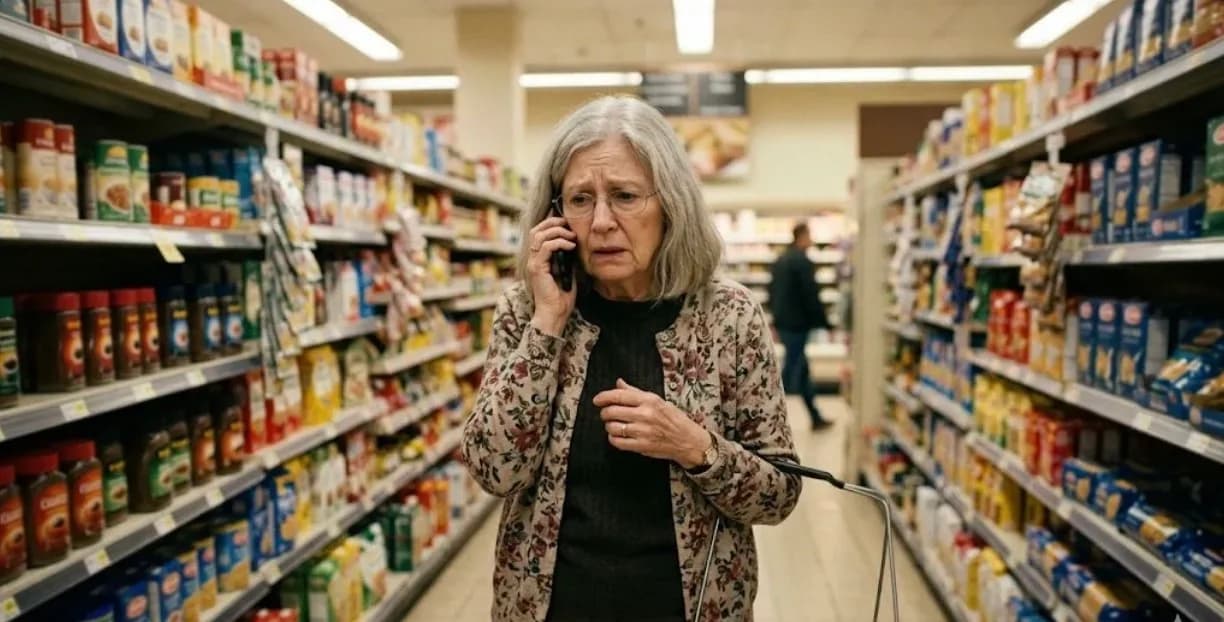
My grandmother is brilliant. Astute, sharp, the kind of person you'd confidently bet couldn't be fooled by anything. Last year she spent 40 minutes on the phone with someone pretending to be from Chase Bank Fraud Prevention. She was standing in the aisle at Target, holding $2,000 in gift cards, fully convinced her life savings were being drained in real time.
A stranger happened to overhear the panic in her voice. He walked up, got on speakerphone, confronted the scammer directly, and told her she was safe. That man saved her savings. But it shouldn't take a random hero in aisle four to stop a sophisticated financial crime.
Forty minutes. A terrified grandmother. That's how easy it is.
If you're reading this, you're probably trying to figure out how to stop this from happening to your family. The scale of the threat is staggering—Americans over 60 reported $7.7 billion in total losses to the FBI in 2025, a 59% increase from the $4.8 billion reported in 2024. The numbers aren't stabilizing. The tech is getting cheaper. And the scariest part isn't deepfakes, actually. The scariest part is how boring the scripts are. They don't need a perfect imitation of your voice. They just need an urgent tone and an Amazon order that doesn't exist.
Why This Is Getting Worse, Fast
Generative AI changed the economics of fraud. Running a phone scam operation used to require native-English speakers, expensive VOIP setups, and rehearsed scripts. Now a $20/month subscription handles the language barrier. Three seconds of audio from a public Facebook video is enough to clone someone's voice with near-perfect accuracy. In 2025, the FBI tracked AI-related fraud for the first time and received 22,364 complaints totaling $893 million in losses.
The FBI's 2025 Elder Fraud Report revealed a 59% increase year over year, from $4.8 billion in 2024 to $7.7 billion in 2025. That's just the reported losses. Total reported losses across all fraud categories in 2025 reached a staggering $20.8 billion. The actual number is much higher because most victims either don't report or don't know they were scammed until months later, when the gift cards are long gone and the "refund" never came.
I want to be careful here: this isn't an elderly-people-are-gullible problem. Cognitive scientists at UCSB published research in late 2024 showing that social isolation, urgency, and authority impersonation are the three variables that make anyone susceptible regardless of baseline intelligence. My grandmother isn't naive. She was isolated (alone in a store), told her accounts were being drained (urgency), by someone who knew her account balance (authority). That combination breaks people. That's the actual mechanism.
Step 1: Establish a Family Safe Word Today
This is the single most effective thing you can do before anything else. Takes five minutes.
AI voice cloning is real and it's good. Scammers pull three seconds of audio from a public post and clone a voice that sounds exactly like your kid, your spouse, your grandchild. Then they call at 2am claiming to be stranded, arrested, in an accident, and they need money right now.
Set a family safe word. Simple, something you'd never randomly say. If anyone calls claiming to be a family member in distress and asks for money, the rule is: ask for the safe word. If they don't know it, hang up.
Here's what they don't tell you about the safe word, though. The clone is going to pivot. It sounds exactly like your grandkid. They'll say they forgot, or that they're in the back of an ambulance and don't have time for this, or that they're scared and why are you making this harder. The clone will cry. It sounds exactly like the crying you've heard your whole life. The whole psychological trap is that they want you to feel guilty for even checking. The more you press, the harder they lean into the stress to make you fold.
Don't fold. If they can't give the word, it isn't them. Full stop.
A few families I've spoken to add a second layer: a code phrase the real family member can include in a text or call to signal something is wrong without tipping off the scammer. "Tell mom I said hi" means "I need help right now." Redundant? Maybe. But redundancy is the point.
We're building this directly into the Auralis core. Coming shortly after launch, we're introducing a comprehensive Family Defense feature—a unified safety layer that goes far beyond a simple word generator. It’s designed to synchronize your family's internal verification protocols, making it virtually impossible for an outside voice to mimic your circle's private language.
Step 2: Make It Easy for Them to Pause and Ask You
Most scam victims don't reach out mid-call because the scammer specifically coaches them not to. "Don't tell your family, they'll freeze the account." "This is a federal investigation, you cannot discuss it with anyone." That secrecy instruction is diagnostic. Legitimate banks don't ask you to hide things from your family.
The practical fix is counterintuitive: don't make it about scams. Make it about a standing rule. "If anyone ever asks you to keep something secret while asking for money, call me before you do anything." Frame it as a family policy, not as "I don't trust your judgment." That distinction matters. The people who get scammed aren't stupid; they're isolated and pressured. Giving them an easy out ("my family has a rule, I have to call my daughter first") gives them something concrete to say without feeling like they're accusing the caller of anything.
Why Call Blockers Are Obsolete (And What Replaced Them)
The standard advice for years was: install Truecaller, Hiya, or Robokiller. These apps run on blacklists. Known scam numbers get flagged. "Scam Likely" shows up on your parents' screen.
The problem is structural. Scam operations buy new VoIP numbers for fractions of a penny. A number gets flagged, they discard it. By the time a number shows up in a blacklist, the scammer has already made thousands of calls on it and moved on. You're always defending against last week's attack.
The 2025 Robokiller annual report acknowledged that spam call volume actually increased despite widespread call-blocking adoption. More installs, more blocked numbers, more calls. Because the economics don't change. Blocking numbers is like cutting off a hydra. The actual attack surface isn't the phone number. It's the conversation happening through the speaker.
Auralis launches soon.
Join the waitlist and get founding member pricing before it closes.
Caller ID spoofing made this worse. Most people don't know that the number showing up as "Chase Bank" or "Social Security Administration" is trivially easy to fake. Any VOIP service lets you set outbound caller ID to whatever you want. Your parents see "IRS" and think the IRS is actually calling. That psychological head start is worth more than any amount of call blocking.
Step 3: The "Gift Card Rule"
No legitimate entity on earth will ever ask you to pay with gift cards. Not the IRS. Not Social Security. Not Medicare. Not your bank. Not Apple. Not your grandchild stranded in Mexico.
This sounds obvious. When you're 72 and someone who sounds exactly like your bank's fraud department is telling you that criminals are inside your account right now and the only way to protect your savings is to transfer them to a safe holding account via iTunes gift cards, it stops being obvious and starts feeling like the only rational option.
Write this down. Put it on a notecard near the phone: If anyone asks me to pay with gift cards, hang up.
When you see gift cards in a store, you'll notice they often have signs now saying "If someone told you to buy these, it's a scam." Those signs are there because cashiers catch it often enough that stores put up permanent warnings.
Step 4: Live Detection — How the Technology Actually Works
Everything above is behavioral. It all depends on your parents pausing, remembering the rules, feeling comfortable to push back. Most of the time they don't. The scammer is specifically trained to prevent that pause from happening.
The technical solution that actually works is real-time audio analysis during the call.
The way this works: your parent puts their phone on speaker during a suspicious call. The protection app opens the mic and streams audio to an AI engine in the background. Within a few hundred milliseconds, that engine starts transcribing both sides of the conversation and analyzing the structural patterns. Not just keywords. The engine looks for the architecture of manipulation: urgency stacking, isolation instructions, authority claims, resistance overriding, secrecy pressure.
A real scam call has a signature. The caller escalates pressure every time the target hesitates. They block verification attempts ("I can't give you a callback number for security reasons"). They layer urgency on top of urgency. A rule-based pattern system catches the obvious tells fast, and an AI model handles the nuanced persuasion tactics the rules would miss.
The live risk score updates every few seconds. When it crosses a threshold, a full-screen alert fires and a live AI coach tells the user exactly what to say to safely end the call.
That's what Auralis does. I built it because I watched the gap between "behavioral advice your parents will forget" and "full device lockdown"—and realized there was absolutely nothing in between. Auralis is that missing link: actual, real-time protection. The latest data shows that while the median loss for someone in their 70s is $1,000, in AI-cloned wire transfer scams, that average climbs past $62,000. That's not just a statistic; it's an inheritance vanishing in ten minutes.
I am obsessed with the latency problem. By collapsing our detection into a single Multimodal Neural Stream, we've brought the end-to-end response time down to sub-300ms. It's the difference between catching a lie mid-sentence and catching it after the 'Send' button has already been pressed.
Step 5: What To Do If Your Parent Was Already Scammed
A lot of guides skip this. But statistically, if you're reading this, there's a decent chance it's already happened or close to it.
First, immediately. If they paid by gift card, call the gift card issuer directly. Most issuers (Amazon, iTunes, Google Play) have a fraud line and if the cards haven't been redeemed, there's a real chance of recovery. Do this within hours, not days.
Wire transfers are harder. Call your parent's bank and report it as fraud immediately. Ask specifically about a wire recall. Banks have 24-48 hours to attempt a recall before the money is gone. Some will do it, some won't, but you have to ask.
File a report at reportfraud.ftc.gov. This isn't just bureaucratic. The FTC uses these reports to identify patterns and share data with law enforcement. It takes 10 minutes and actually matters.
Don't skip the emotional part. Scam victims frequently don't tell their family out of shame. They feel humiliated. They blame themselves. The shame is part of why losses go unreported and why victims sometimes get scammed again by "recovery scammers" who call them claiming to be able to recover their money for a fee. Tell your parent clearly: this wasn't their fault. The people who run these operations are professional fraudsters who spend every day getting better at this. Being deceived isn't a character flaw.
The Hard Truth About Telecom
I genuinely don't understand why this hasn't been solved at the network level. The major carriers know when a number was registered 20 minutes ago and has already made 10,000 calls. That's detectable. STIR/SHAKEN, the caller ID authentication protocol that was supposed to fix spoofing, has been partially rolled out since 2021 and scam call volume has gone up anyway. Something is broken in the incentive structure there and I haven't figured out what. The margins on VoIP traffic might just be too good to turn off aggressively. I don't know.
What I do know is that waiting on the telecom industry to fix this is not a plan.
What to Do This Week
Set the safe word today. Have the conversation before it's urgent. Put the gift card rule on a notecard near the phone. And if your parent is someone who would never push back mid-call no matter what rules you set, that's exactly who real-time protection is for.
Auralis is launching soon. We're capping founding member lifetime access at 100 spots at $99 one time, and after that it moves to a monthly subscription. The waitlist is live now at tryauralis.app. Takes 30 seconds to join. If you're on the fence, the founding member price goes away the moment those 100 spots fill, and that's a real number, not a fake countdown.
Join the waitlist. Share this with someone whose parent you'd worry about. That's genuinely the most useful thing you can do today.
The stranger in aisle four isn't always going to be there. Auralis will be.
by Arnav Sharma, CEO and founder of Auralis April 12, 2026